Tradition & ceremony
An ancient knowing
Long before clinical trials, sauna was medicine of a different kind - communal, elemental, sacred. Its survival across seven millennia of human history is its own kind of evidence.

Finland
Where the sauna was born
The Finnish sauna is believed to date back as far as 7,000 BC - one of humanity's oldest wellness traditions, older than the wheel. In Finland, a country of 5.5 million people, there are an estimated 3.3 million saunas. Nearly 90% of Finns take a sauna at least once a week. UNESCO recognised Finnish sauna culture as Intangible Cultural Heritage of Humanity in 2020 - one of the highest distinctions a living cultural practice can receive.
Central to the tradition is löyly - the steam released when water is thrown onto hot stones. The word carries layers of meaning: steam, breath, spirit. In Finnish folklore, the sauna was considered the purest place in the home. It was where people came to be born, to heal, and ultimately to be prepared for death. The Saunatonttu - a small guardian spirit said to protect the sauna - embodied the belief that this was a sacred space, one that required respect and quiet intention to enter.
Global traditions
Heat as ceremony, across cultures
Finland is not alone. Across human history, cultures have independently arrived at the same understanding: heat, applied intentionally and communally, transforms. The Roman thermae were public bathhouses that served entire cities - spaces for cleansing, conversation, and civic life. The Turkish hammam, still practiced widely today, is a ritual of communal bathing, storytelling, and unhurried presence.
In Korea, the jjimjilbang is a beloved family institution: multi-room heat spaces where people sleep, eat, and spend entire days together in warmth. Japan's sento and onsen culture centres on mindful immersion, with deep roots in Shinto purification ritual. Each tradition, across every continent, carries the same thread - that heat is not merely physical. It opens something.


Community
The sauna as equalizer
In the steam, distinctions dissolve. The Finnish sauna has long been described as a place where class, status, and rank are set aside - where the CEO and the farmer sit on the same bench, where conversation flows more honestly than it does anywhere else. This is not coincidence.
Research from Sweden's 2022 MONICA study, tracking 1,180 people aged 25-74, found that regular sauna bathers reported significantly higher general health, greater social connection, and lower incidence of high blood pressure and anxiety compared to non-bathers. Finland, which has topped the World Happiness Report for six consecutive years, has more saunas per capita than any country on earth. Whether that correlation means anything is something you can decide for yourself - ideally from a bench, in the heat.
...a place where we go to purify ourselves... we come into the fire not just to sweat. To pray. To breathe. To return to the womb of the Earth.
- Anonymous
Clinical research
What the research shows
The following findings come from peer-reviewed studies published in JAMA Internal Medicine, the American Journal of Physiology, the International Journal of Hyperthermia, and BMC Medicine - among the most cited research on sauna and human health.

Cardiovascular health
Your heart on heat
The physiological response to a sauna session resembles moderate aerobic exercise: heart rate climbs to 100-150 BPM, blood vessels dilate, and cardiac output increases substantially. A landmark study from the University of Eastern Finland - published in JAMA Internal Medicine in 2015, tracking 2,315 men over a median of 20 years - found that men who used a sauna 4-7 times per week had a 63% lower risk of sudden cardiac death compared to those who went once a week. The same frequent users showed a 50% reduction in fatal cardiovascular disease overall.
A 2024 randomised controlled trial published in the American Journal of Physiology found that adding just 15 minutes of Finnish sauna after exercise significantly improved cardiorespiratory fitness, lowered systolic blood pressure by 8 mmHg, and reduced total cholesterol - beyond the effects of exercise alone. Separate research found 4-7 weekly sessions were associated with a 46% lower risk of developing hypertension and a 62% lower risk of stroke. These are not small effects.
Mental health
The heat-mind connection
A 2024 study from UCSF combined infrared sauna sessions with cognitive behavioural therapy for patients with major depressive disorder. Of 12 participants who completed the protocol, 11 no longer met diagnostic criteria for MDD by the end of the study - reductions larger than CBT typically produces alone. Researchers believe the mechanism involves thermoregulation: temporarily raising core body temperature triggers a prolonged cooling rebound that appears to have genuine antidepressant properties.
At the neurochemical level, heat stimulates release of serotonin, beta-endorphins, and brain-derived neurotrophic factor (BDNF) - a protein that protects and repairs neurons and is sometimes called the brain's natural antidepressant. Cortisol, the body's primary stress hormone, is measurably reduced following sauna sessions. Regular users consistently report lower baseline anxiety, greater stress resilience, and more stable mood.


Sleep
The best sleep aid you're not using
As core temperature rises during a sauna session and then falls gradually afterward, it closely mimics the body's natural pre-sleep thermal drop - the same signal the nervous system uses to initiate rest. Research shows a single session can improve deep sleep quality by up to 70%. In one study, 83% of participants reported measurable sleep improvements lasting up to two nights after just a single session.
The combination - physical relaxation, cortisol reduction, and natural temperature regulation - makes sauna one of the few lifestyle interventions with a well-documented, direct effect on sleep architecture. It works not by sedating you but by helping your body remember how to rest.
Recovery & performance
How athletes use the heat
Heat shock proteins - activated by thermal stress - repair damaged and misfolded proteins in muscle tissue, accelerating recovery after intense exercise. Research shows sauna exposure also increases growth hormone concentration by 2-5 fold in the short term, supporting muscle repair and adaptation. For endurance athletes in particular, heat acclimation through regular sauna use has been shown to increase plasma volume and improve performance in subsequent training.
A 2022 randomised controlled trial found that exercise combined with regular sauna bathing improved VO2 max - a key measure of aerobic fitness - by an additional 2.7 mL/kg/min compared to exercise alone. The sauna does not replace training. It compounds it.

Brain health
Protecting the mind over time
Long-term sauna use is associated with meaningful reductions in dementia risk. In the Kuopio Ischemic Heart Disease study, men who used a sauna 4-7 times weekly had a 66% lower risk of developing dementia and a 65% lower risk of Alzheimer's disease compared to once-weekly users. The mechanisms are believed to include improved cerebral blood flow, reduced systemic inflammation, and the neuroprotective effects of heat shock proteins and BDNF upregulation - the same protein implicated in antidepressant effects.
These are observational findings, and causality has not been proven. But the consistency and magnitude of the association across multiple large cohort studies has researchers paying close attention.
Totonou
The Japanese art of presence
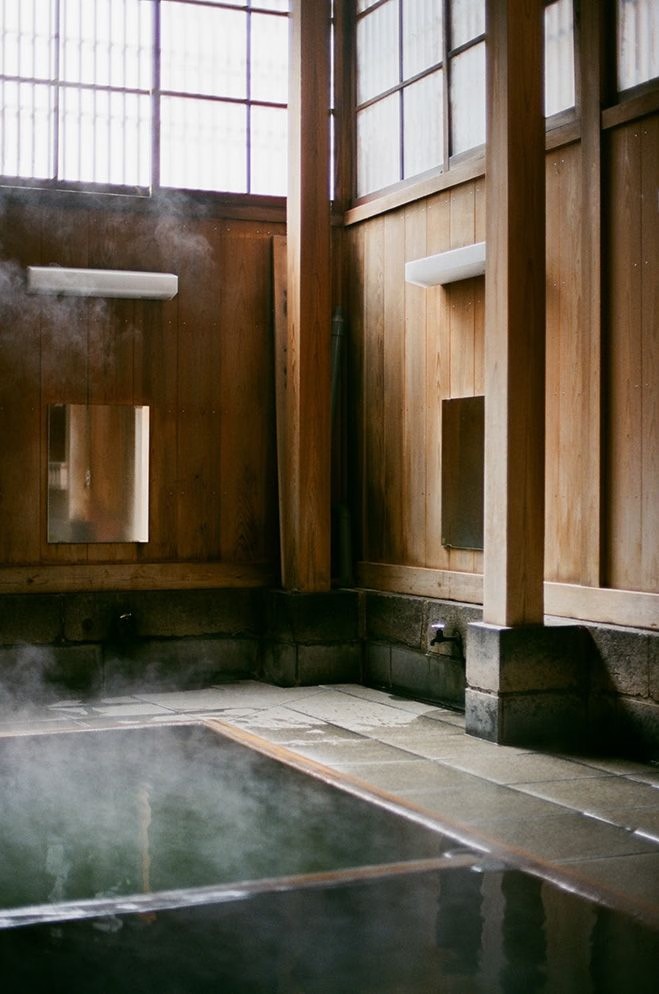
In Japan, the word totonou describes a state of profound calm and clarity - sometimes translated as 'harmonised' or 'tuned' - reached after alternating between intense heat and cold immersion. It is not relaxation exactly. It is something closer to reset. A 2023 peer-reviewed study published in PMC examined the neural basis of totonou and found measurable changes in brain networks associated with emotional regulation, parasympathetic activation, and deep present-moment awareness.
This experience - heat, then cold, then stillness - is increasingly understood not as an extreme sport but as a technology of presence. The contrast forces the nervous system out of its default patterns. What remains, in the quiet after, is often described as the clearest thinking of the day.
All people are created equal, but nowhere more so than in a sauna.
- Finnish Proverb
Getting started
Making it a practice
The research points consistently to frequency as the key variable. The greatest protective effects appear in people who sauna 4-7 times per week - but meaningful benefits begin at just 2-3 sessions weekly. A typical session of 15-20 minutes at 80-100°C is enough to trigger the cardiovascular, neurochemical, and heat shock protein responses documented in clinical literature. For beginners, 10-15 minutes is a comfortable and effective starting point. The most important thing is consistency. Sauna is a practice, not a treatment.
2-3×
weekly sessions to begin feeling the benefits
15-20 min
per session - the clinical sweet spot
4-7×
weekly for maximum cardiovascular protection
A note on safety
Sauna is safe for most healthy adults. Those with heart conditions, pregnancy, or other medical concerns should consult a doctor before beginning a sauna practice. Stay well hydrated before and after each session. Listen to your body - step out if you feel dizzy or unwell. All SaunaScout hosts are verified, and every booking includes a brief health screening waiver.
Ready to feel the difference?
Find a sauna near you and experience it for yourself.